
Monday Musings #151 🤬
You, me and a dog named AI.
Good Monday, Gamer!
CW: This one’s about AI (and politics, religion, and sex). I’m not telling you what to think about it.
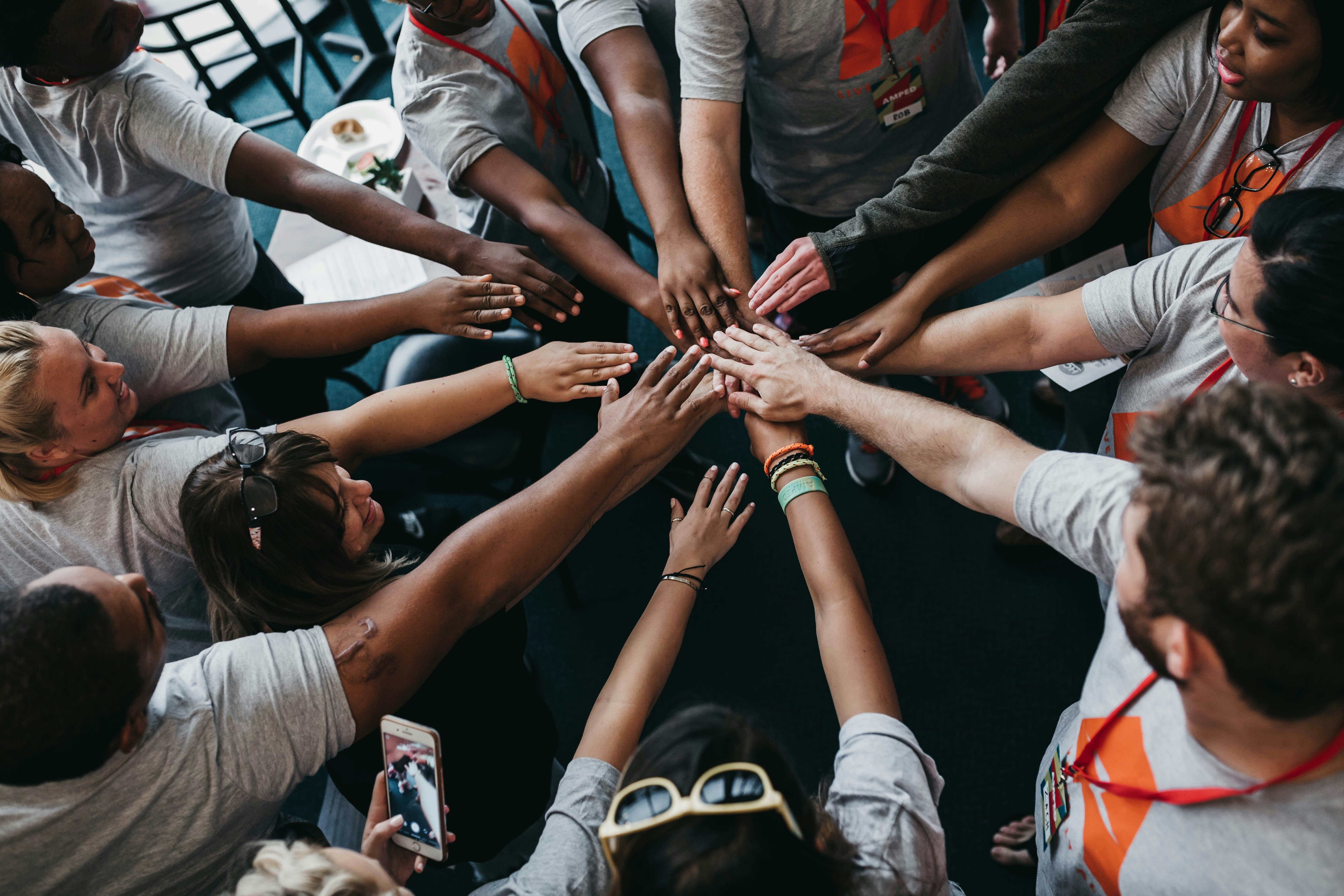
There’s a conversation happening across spaces right now, and if you’ve spent any time in RPG spaces — forums, Discords, social feeds — you’ve seen it.
“Unfriend me if you use AI.” “AI is killing creativity.” “If you’re not using it, you’re falling behind.”
Strong positions. Hard lines. Little room in between.
I want to be clear up front about who I’m writing to. I’m not talking to the investors, the people training models, or the executives making policy calls. I have nothing useful to say to them, and they’re not reading this anyway. I’m talking to us — the GMs, the players, the indie designers, the folks running Discords and tables and small press operations, the con facilitators. The ones @-ing each other on a Tuesday afternoon over a tool none of us built.
That’s what I want to talk about. How we’re talking to each other about AI.
Here’s where I am, for the record.
I use AI*. I don’t shop at Target. I’ve never had Chick-fil-A. I’m into Shibari. I don’t like okra.
Those are all about me — my values, my beliefs, my interests. I’m prepared to talk about any of them, but I’m not interested in changing your mind on any of them either.
I’ve been running my software business since 2006. I’d be dumb AF not to engage with AI tools. I need to know how they impact my operations, my employees, and my clients. I need to understand why so much of the grant and loan money my clients use is suddenly heavy on AI tooling. That’s the job, and I like keeping food in my fridge.
“But Jay, ethics.” Yeah, I hear you. I wish the people building these models had wrestled with ethics before they shipped. We’d be in a very different place. But the fact that I use a tool built under questionable conditions doesn’t automatically make me unethical, and the fact that you don’t doesn’t automatically make you righteous. The situation is messier than that, and pretending otherwise is a big part of why these conversations go sideways. For sure, there are plenty of bad actors in these spaces using AI to make snake oil.
I’m not both-siding this topic. I’m the guy who believed mashing up a camera, an MP3 player, and your phone was DUMB. I LOATHE having to (maybe) opt out of BS upgrades I didn’t ask for. For some of us, engaging with AI isn’t optional. It’s already in the tools — sometimes quietly, sometimes aggressively, sometimes as a feature nobody asked for, sometimes because “work” said so. For others, it genuinely is a choice. Both of those things are true at the same time, and neither is a moral verdict on the person on the other side of the screen. Especially us — the people, the consumers.
How I actually use this stuff
Here’s the honest inventory. Not the should I version. The what’s already happening version.
AI tooling is baked into most of the software I pay for. Adobe products. My coding IDEs. My cloud provisioning services. A lot of my vendors have it sitting in their support portals before I even open a ticket. My new phone shipped with Gemini, Moto AI, and Perplexity preinstalled. Some I’ve managed to shut off. Others I can’t even uninstall to get the storage back. It’s in my email client. It’s in my browsers. It’s in my search engines. These days I’m reading whatever Gemini surfaced at the top of a search before I scroll to the actual results — and I notice I’m doing it.
So that’s the floor. The “opting out” conversation, for me, starts at managing what’s already in the room.
On top of that, I use ChatGPT and Claude for actual work tasks. Remember, I’m a software guy by trade. Show me a software or hardware tech worker who refuses to use AI tools, and I’ll show you an unemployed person. It’s not even about that person; the paymasters are calling this dance, I’ve witnessed it.
For gaming stuff, early on, I generated art for locations and maps for games I was running, and made some banner images for past Play Fearless posts. The novelty was real. It was fun. And then it wore off, and I drifted back to Unsplash, personal photos, and Creative Commons material — not because I worked out a clean ethical position, but because I liked the feel of those better for art. I use Canva for player-facing handouts and other materials. Canva also has AI tooling now; it’s all too happy to organize, clean up, or lay out your stuff... and I often let it.
I still use Pinterest the most for inspiration, even though AI content is exploding there too. I’ve had Gemini in Gmail clean up technical language for non-technical clients and cool down hot language in emails I prolly shouldn’t send. None of this is a recommendation. It’s a description. I’m sharing it because I think the discourse goes better when people stop arguing from imagined positions and start telling the truth about what’s actually on their machines. What I’m experiencing is siloed conversations — anti-AI folks gathering to talk about how garbage it all is, and other spaces where folks are scared to talk about AI tooling they use (by choice or work demands) whisper. That sucks.
And then there’s this.
Last year, my kid told his Algebra II teacher he was planning to use ChatGPT to pull up his failing grade. She told me. I told him: absolutely not. That’s a fast way to lose every piece of electricity-using gear in your room. For sure.
Fail Algebra II if you have to — but fail it through struggle. Fail it working with the teacher. Let Algebra II beat that ass if it must. Go down fighting. Then at least you’ll know something about you and Algebra II. You’ll live.
Mark Hx.
I think a lot of the heat in the AI conversation comes from people trying to draw one line that covers all of those cases at once. I don’t think there is one. I think there are a lot of small lines, drawn case by case, and most of us are still figuring out where ours go. And they don’t have to be the same.
In tabletop spaces, I’m watching a different version of this play out. People drawing clear personal boundaries — and then extending those boundaries outward as expectations for everyone else.
“Don’t bring AI to my table.”
“Don’t publish with AI tools.”
“Don’t be part of this community if you use it.”
As I sign up to run games at conventions, there’s the question: “Is this AI-generated?” “Did you use AI?” I ask, how are you measuring? It’s prolly in the tools.
Boundaries are valid. Expectations are human. The hostility that sometimes rides shotgun with them is the part worth dialing back.
Here’s a thing I think is true and not said often enough: very few of us actually control the development of AI.
What we do control is much smaller and much closer to home:
How we use the tools available to us
How transparent we are about that use
How we treat each other when our choices differ
That last one is the piece I see slipping the most, and it’s the one that bums me out the most. We’re spending an enormous amount of energy fighting about a thing we don’t control, and not enough on the thing we do — which is each other.
TTRPG players already know how to do this. We have decades of practice negotiating incompatible preferences without setting each other on fire. Safety tools. Lines and veils. The X-card. System debates. Playstyle mismatches. Tone calibration. Session zero. We have built, imperfectly but really, a culture around the idea that two people can want different things from a game and still sit at the same table — or decide, kindly, that they shouldn’t, and move on.
We have the muscles for this conversation. We just gotta flex them.
What that looks like, in practice, is unglamorous:
Ask questions instead of assuming intent. Explain your boundaries without turning them into ultimatums. Recognize that someone’s use of a tool — or refusal to use one — might be shaped by their job, their time, their access, their disability, or just where they are in their creative life right now. Leave room for people to change their minds, including yourself.
I don’t have answers for you or your table. I’m not going to tell you to use AI or not use it. That’s not the post.
The post is: we can’t slow the technology down on our own, but we can decide whether the way we talk about it makes the community stronger or more fractured. At the table, we already know how to do this. We listen. We negotiate. We build something together.
It might be worth bringing that same energy to this conversation, too.
I’m asking y’all to have kinder ones.
5 Mondays Left.
*I’m measuring by the tools, implicit and overt.
Catch ya next week.

ICYMI
TIL about Piecepak

Sarah Doom: A Year on Patreon
10 Years later with AWBO & Judd