
Monday Musings #143
Musings Three!
Good Monday, Gamer!
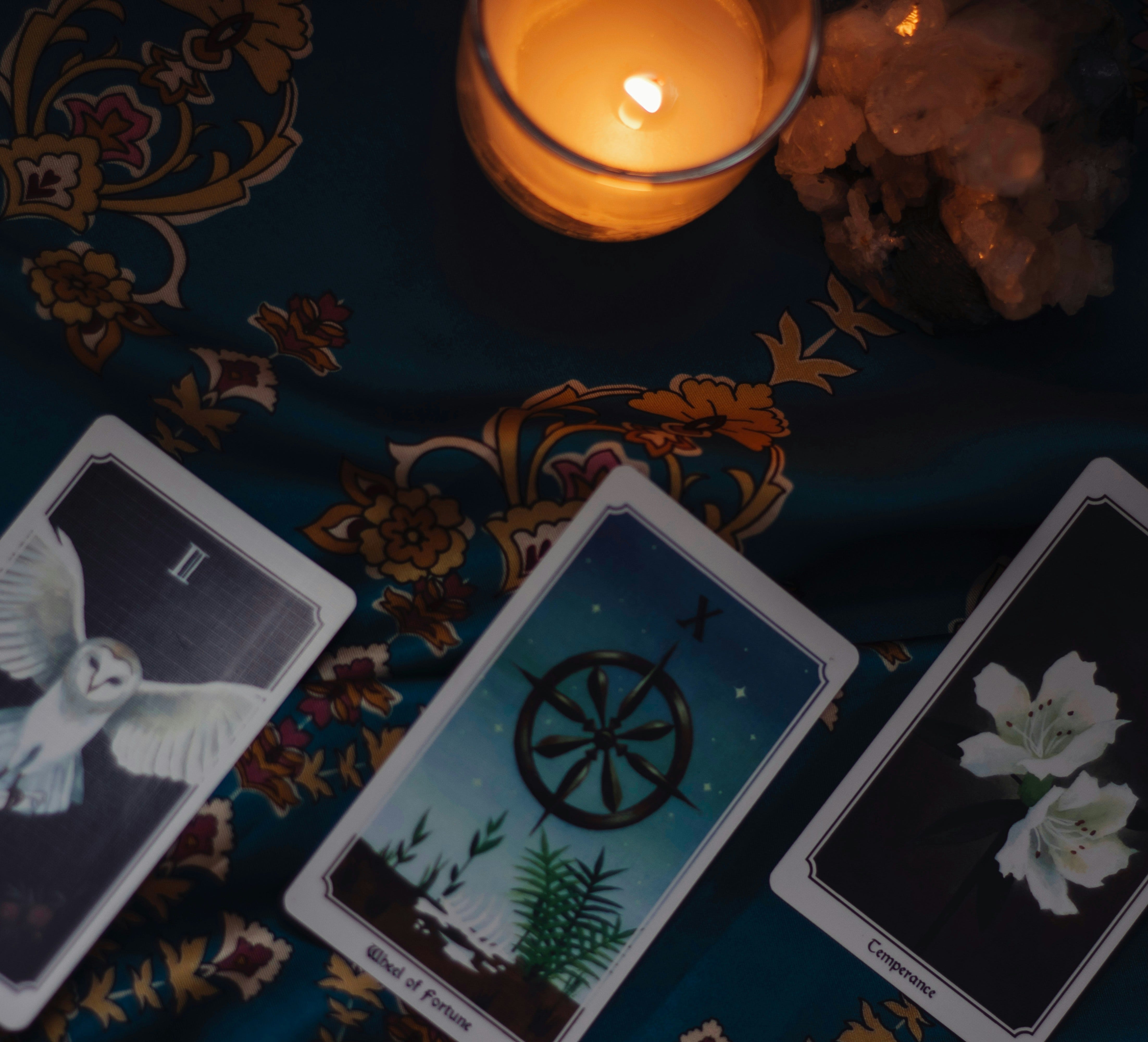
“Omne trium perfectum.”
In the occult, the number three shows up everywhere.
Three stages of alchemy. Three faces of the goddess.
Three knocks at the door when something on the other side wants in.
Even outside the esoteric traditions, three has a certain gravity to it. Storytellers lean on it constantly. Three wishes. Three trials. Three clues that point the investigators in the right direction.
There’s something about the number that feels complete without being overwhelming. Enough pieces to create a pattern, but not so many that the pattern disappears.
Three things have been on my mind this week around the table.
First, the new Muses of Play episode with the Baker family is live on Patreon. Sarah and I sat down with the Baker Family to talk about creativity, collaboration, and what it looks like when making things is just part of everyday life.
Second, in Monster of the Week: Occulted KC, the hunters took a break from chasing the next Mystery and instead started pulling on the loose threads left behind after eight sessions of play. What the players latch on to enriches the campaign world and begins to develop a few interesting knots.
And third, I’ve been sketching out a magical design mashup: Ars Magica + Powered by the Apocalypse + Legacy: Life Among the Ruins. Wizards chasing immortality across generations, magical covenants rising and falling, and a game that leans harder into mythic fantasy than historical simulation.
Three topics. Three threads. Let’s see where they lead.
Powered by The Bakers
The newest episode of Muses of Play is up on Patreon this week, and it’s one I’ve been looking forward to sharing for a while. Sarah and I sat down with the Baker family—for a long conversation about creativity, making games, and what it looks like when building things is part of everyday life.
If you’ve spent any time around modern tabletop RPGs, you’ve felt the Bakers’ influence whether you realized it or not. Apocalypse World and the Powered by the Apocalypse family of games changed how a lot of us think about play. Playbooks, moves that push the fiction forward, games that trust the table to discover the story instead of following a plotted script—that whole way of thinking about design owes a lot to their work.
The Bakers describe a house where materials are always within reach. Tools are visible. Projects are half-finished and waiting. Someone might be writing, someone else sewing, someone tinkering with game mechanics. Creativity isn’t treated as a rare lightning bolt. It’s treated like something you do regularly, like cooking dinner or taking a walk and that resonates with me.
A lot of people imagine creative work as a big moment—writing the book, launching the game, finishing the project. But the truth is it’s mostly smaller than that. It’s the daily habit of making things. Sketches that don’t go anywhere. Half-written ideas. Systems that almost work. Sessions at the table where something clicks and you realize you’ve stumbled onto a better way to run a game.
One of the parts of the conversation I appreciated most was how openly they talk about unfinished work. Quilts that stalled out. Drafts that never became books. Designs that lived on a shelf for years. Creative people accumulate unfinished things the way mechanics accumulate tools. They’re parts. They might get used later, or they might just teach you something along the way. Either way, they’re not failures.
Another thread that stayed with me is the importance of community. The Bakers talked about how creative communities used to gather in a few big online spaces. Those hubs have mostly scattered now. But the underlying idea still holds: you need people who show up. People who make things. People who check in regularly and share.
If that sounds like your kind of conversation, the full episode of Muses of Play with the Bakers is now live on Patreon. It runs about an hour and fifteen minutes, and it feels a lot like sitting at the table with them. Big thanks to the Baker family for doing this with us. It was a joy to catch up and just talk, and even more of a joy to share.
Following the Threads
We took a small detour at the table this week in Monster of the Week: Occulted KC. No new Mystery. Instead, after about eight sessions and a handful of cases, we paused and looked at the board. There are a lot of open threads (You can catch up!!)
Rather than pushing the next Mystery, I asked the players, “What do you want to follow up on? ” This is a GM skill. You won’t find (IIRC) this move in Monster of the Week. The structure of the game gives you strong episodic play—one Mystery at a time—but over multiple sessions, the world starts leaving many loose threads around. Blades in the Dark uses the term ‘Free Play’. Mouseguard has the Player’s Turn. So this week, we do that.
We learned a good deal about the characters. Blake, the Curse Eater, has a night job as a custodian. Eleanor, the Flake, is paid to stay away from family. Micahel Lewis, IT support.
They spent the session checking in on NPCs they’ve helped/saved, and tracking down Bennie, who’s become the Hunter’s chosen Big Problem. No prep required on my end, other than keeping my notes straight and updated. The session became a kind of investigation collage. The hunters bounced around Kansas City chasing leads, making calls, visiting places they had already burned once or twice, and asking questions that I honestly didn’t know the answers to until they asked them.
That’s the moment I’m always looking for as a GM. Player-driven play isn’t just “the players choose a mission.” It’s when they start pulling on the world. When they decide what matters enough to investigate. When the questions come from them instead of the Mystery sheet. You’ll see what the players are interested in. Follow up on that.
They had theories...some better than mine.
Second, it helped reset the campaign’s sense of place. Instead of a series of disconnected cases, the hunters started to see Occulted KC as a network of overlapping problems.
And third, it gave me new fuel for the next Mystery. Because now I know what the players care about.
But this session—the one where the players followed their own leads—did more to shape the campaign than any prep document I could have written.
Ars Magica, Apocalypse World, and the Long Game
I’ve discovered Project: RedCap, a fan Ars Magica Open-content community, and have been circling an idea lately: what happens if you take Ars Magica, run it through the Powered by the Apocalypse engine, and then graft on the generational play from Legacy: Life Among the Ruins?
Ars Magica has always had one of the best premises in fantasy gaming. A circle of powerful wizards, each pursuing their own magical obsessions while sharing a covenant that serves as their home base and laboratory. The game already hints at a long arc of play—years passing, apprentices rising, magical projects unfolding slowly.
But the original game leans hard into historical Europe simulation. Tribunals, medieval politics, church relations. That’s all interesting, but it’s not the part of the premise that grabs me. The part that grabs me is wizards chasing immortality.
Not just longer lives, but stranger ones. The kind of magical ambition that reshapes the world around them. That’s where the mashup starts to get interesting.
Powered by the Apocalypse gives you moves that push the fiction forward. Techniques and Forms could easily become tags that feed into specific magical moves. Instead of calculating spell levels, the wizard declares intent and rolls the move. Magic becomes fast, expressive, and dangerous in the way fantasy magic should feel.
Then we stir in Legacy: Life Among the Ruins.
Legacy runs on generational play. A generation of time can pass between sessions. Families evolve. The world changes because of the choices made by earlier characters. Now imagine that structure applied to a wizard covenant. A generation of magi pushes the boundaries of magic. One of them vanishes chasing some impossible ritual. Another becomes something inhuman but powerful. Apprentices inherit the library, the tower, and the unfinished experiments.
Twenty years pass.
The covenant is different now. The world around it has shifted. Magical catastrophes have left scars. New magi rise, building on the discoveries—and mistakes—of the last generation.
The campaign stops being about a single wizard’s career and becomes about the long arc of magical ambition.
That feels closer to the fantasy I’m interested in. Not careful medieval scholars cataloging spells, but sorcerers pushing toward apotheosis while the world struggles to keep up.
Ars Magica always had the bones for that kind of play. PbtA could make the moment-to-moment play faster and more expressive. Legacy could give the whole thing a sense of deep strange time.
I really like that Ars Magica idea. Would love to see more on that. And I'll have to check out the Legacy rules.