
Cards Remember.
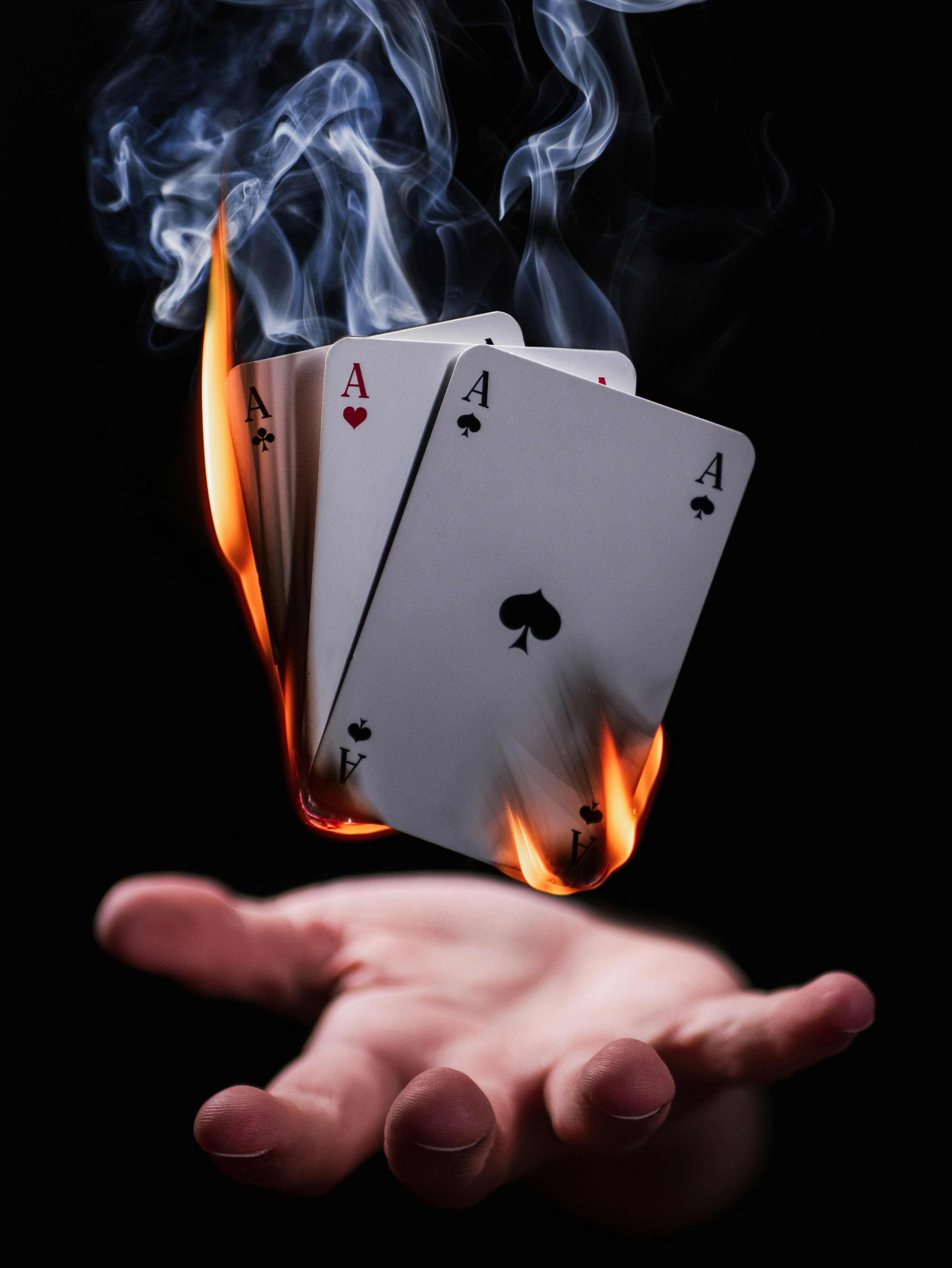
A standard poker deck, three procedures, one OSR table.
Posted as part of W.F. Smith’s Random Blogwagon at Prismatic Wasteland. Roll your own day, write your own post. I got: ‘post on June 7th.’
Pull a card out of a 52-card deck and the deck changes. The probability shifts. The cards remaining are the cards remaining. Pull twenty more without reshuffling and you’ll watch the deck get colder — fewer suits, lower variance, the deck telling you what it has left to give.
A deck of cards is a randomizer with memory.
It’s the property Free League’s Twilight: 2000 (4th Ed.) builds its encounter deck around: a randomizer that runs out of one suit while another climbs, a randomizer that knows what it’s already given you. Their deck is post-apoc-shaped — but the mechanism is portable, and I’m gonna lay it out for you.
Three procedures below. One poker deck. You got this.
🤬 THE GRAMMAR
Before the procedures, the grammar. Two axes do the work for all three.
Suit is category. Every procedure uses the same four suits in the same conceptual slots.
♠ Spades — Threat. Force. Power. The things that hunt.
♣ Clubs — Faction. Order. Alliance. The things that belong.
♥ Hearts — Social. Bonds. Needs. The things that ache.
♦ Diamonds — Change. Strangeness. Knowledge. The things that transform.
Value is intensity.
2–5 — Less. Quiet, subtle, easy to miss.
6–9 — Plain. What it is, no exaggeration.
10–J — Strong. A defining trait.
Q–K — Dominant. This trait runs the show. Everything else moves around it.
A — Singular. The subject IS this trait. Nothing else explains it.
That’s the whole language. Learn it once, every procedure below uses it.
🤬 PROCEDURE 1 — ENCOUNTERS
The pull: Draw 1 card when an encounter check is needed.
Suit tells you what walks onto the road:
♠ Spades — A threat. Predator, hostile patrol, ambush waiting. The thing that hunts.
♣ Clubs — A faction. Patrol, scouts, rival party, NPCs with their own agenda.
♥ Hearts — A find. Travelers, locals, ruins, a place of welcome.
♦ Diamonds — A condition. Weather, terrain shift, omen, supernatural bleed.
Value tells you the weight:
2–5 — Minor. Background flavor. Skirt-able.
6–9 — Standard. Engage or evade. Costs resources either way.
10–J — Significant. Real stakes. Could derail the day.
Q–K — Major. Named monster, faction leader, sea-change.
A — Iconic. The thing this region is known for.
Example pull: Queen of Spades. A major threat. The named predator that haunts this stretch of road — and you already prepped it. Or you didn’t, and you make it up now. Either way, the deck just told you what the next encounter at the table is about.
The deck is not reshuffled until it’s empty. That means the more Spades you’ve pulled this season, the fewer threats are left in the deck right now. The wilderness has memory.
🤬 PROCEDURE 2 — THE NPC DISPOSITION
The pull: Draw 1 card as the encounter begins, before the PCs speak. This sets the NPC’s disposition.
Suit tells you what they want:
♠ Spades — Wants you gone. Out of their territory, off their road, away from their kin.
♣ Clubs — Wants something from you. Information, goods, a job done, a tax paid.
♥ Hearts — Wants something with you. Companionship, trade, alliance, news from the road.
♦ Diamonds — Wants something despite you. You’re incidental. They’re after something else.
Value tells you the intensity:
2–5 — Mild. Negotiable. Talkable.
6–9 — Firm. Will hold the line. Won’t escalate first.
10–J — Committed. Will escalate to get what they want.
Q–K — Driven. Violence is on the table.
A — All-in. This is their last day or their first day. Nothing held back.
Example pull: 4 of Hearts. Mild, companionable. The bandit chief lowers his bow as the PCs come around the bend. “You traveling north? We’ve not had honest news from the Pass in a season.” Probably still bandits. But you can talk.
Suit-plus-value gives you what they want and how badly they want it. Two axes of information from one pull — and a real replacement for reaction tables that keep coming up neutral.
🤬 PROCEDURE 3 — THE DIVINATION
This one is slower. Three cards. For the kitchen at midnight with a coffee and your prep notes open. Or, just as well, at a full table of players with a light prep sheet.
The pull: When you need to know something — about an NPC the PCs are about to meet, a place they’re about to enter, a faction whose name just appeared on a tapestry, an item whose nature you haven’t decided — release your question and pull three cards in order.
Card 1: The Face. What it appears to be. The public knowledge. The first impression.
Card 2: The Hunger. What it wants. It’s drive. The thing it would risk everything for.
Card 3: The Wound. What it hides. The lie, the scar, the secret that explains the gap between the Face and the Hunger.
Suit and value mean the same things they mean in Procedures 1 and 2. The slot tells you how to read the card.
A worked example: the swamp ruins up north
PCs gonna PC. They decided to go north to the swamp ruins instead of west, like I’d prepped. What’s up north in the ruins? I pulled three. Here’s what the deck gave me, and how I read it:
Face — 6 of Hearts. Plain. Bond / Care / Need.
Hunger — 8 of Spades. Plain. Threat / Force / Power.
Wound — 9 of Spades. Plain–Strong. Threat / Force / Power.
The Face is a Heart. Plainly. The ruins look like a place defined by bond, care, or need. Locals talk about them with grief, not fear. Travelers who’ve gone in say “someone’s still in there. They wanted help.” The ruins were somebody’s home — a healer’s holdfast, a small order, a hermit-temple. Whatever the ruins do now, the face they show the world is mournful and welcoming.
The Hunger is a Spade. Plainly. What the ruins want is to feed. Not metaphorically. The presiding thing in the ruins — spirit, parasite, slow curse, whatever — wants bodies inside it. An 8 means it’s well-fed enough to be patient. It eats when food walks in, then it sleeps.
The face is welcoming because the welcome is a trap.
The Wound is another Spade. Higher. A 9. This is the twist. You’d expect the Wound to be soft — a sad frailty hiding under the bigger story. Instead the deck drew another threat, stronger than the hunger.
The hidden thing is even more dangerous than the hunger.
The face is a sad bond. The drive is hunger. The secret is that the hunger isn’t the worst thing here.
The ruins are a containment site. The healer’s order that lived here was sworn to keep something buried, and they failed — or didn’t fail, depending on how you read it. The slow hunger that ate them is now the lock on the deeper thing. Every soul the ruins eat is one more soul keeping the seal. The PCs will come because someone needs help. They’ll find the hunger and think it’s the boss fight. They’ll be wrong.
That’s the game. Twelve minutes of interpretation, full architecture: hook, encounter, twist.
The pull also tells me what the dungeon isn’t. No Aces, no court cards. This isn’t an iconic legendary site. It’s a workhorse — a real place that operates at the plain-to-strong end. I can drop it in any swamp on any hexmap and it holds.
The suit repetition is the move. Two Spades on Hunger and Wound is the deck saying this place is fundamentally about violence, even when it doesn’t look it. If the Wound had come up a Heart, I’d have a tragic place. A Diamond, I’d have a strange place. Another Spade meant layered violence — which is the most dungeon-shaped result the deck can give.
🤬 THE GANGSTER OF LOVE (OPTIONAL)
Leave the two Jokers in the deck if you want a wild card in the literal sense — the moment when the game responds to the players specifically.
When a Joker comes up, something the players did has consequences. GM’s prerogative. The Joker is the “the world is responding to you specifically” card — not a random encounter, not a passing weather front, but a consequence with a name on it. A burned contact comes calling. A favor gets cashed in. A trail the PCs thought went cold lights back up. The seal they cracked last session leaks something new.
After a Joker comes up, set it aside for the rest of the session. Shuffle it back in next session. The Jokers track the living state of the campaign — they’re the cards that remember the players’ fingerprints.
Two Jokers is a soft setting. Want more? Add a deck of Tarot’s Major Arcana. Want less? Pull one Joker out. The deck is yours.
🤬 WHAT CARDS DO
Three things, briefly:
Combinatorics. A single card pull is 1-in-52. A three-card ordered pull is 1-in-132,600. You will never roll the same Divination twice. Your campaign’s NPCs and places won’t start to feel sampled-with-replacement — they’ll feel found.
Memory. Procedures 1 and 2 don’t reshuffle until the deck empties. The wilderness empties out. The dispositions empty out. The world is a finite pool of possibilities, and it changes as the campaign moves through it. Reshuffle when the deck runs dry, and mark the moment in fiction — the season turns, the war ends, the comet passes. Or vice-versa. The game breathes in cycles instead of running on a static random table.
Interpretation. A card says Queen of Hearts. That’s an image before it’s a number. The GM does more imaginative work with cards because the cards suggest before the table tells them what the suggestion means. You’re a step away from Tarot now — which has been doing this exact job for six hundred years.
🤬 THE TRICK
The deck on your shelf — the ones you get for all sorts of promo stuff and haven’t shuffled ever — has been a TTRPG tool the whole time. You didn’t need Mörk Borg’s deck, the Deck of Many Things, or a $50 indie oracle. You needed three procedures and a poker deck.
T2K showed me what cards can do at the table. The procedures above are what cards can do at my table — and yours, if you want them. Cut the deck. Pull a card. Read the suit. Your world will tell you what it is.
Spades hunger. Hearts ache. Clubs muster. Diamonds change.
That’s the whole trick.
Abracadabra.
This is really good!
Love this!